
Why do people use nicotine? What are the benefits and the risks of the different nicotine products for young people, athletes, pregnant women, people with cardiovascular diseases, and the general public? Prof. Neal L. Benowitz, a globally renowned expert on nicotine and tobacco issues, explained the effects of nicotine on human organism and gave evidence-based answers to those questions, in a keynote speech, chaired by David T. Sweanor.
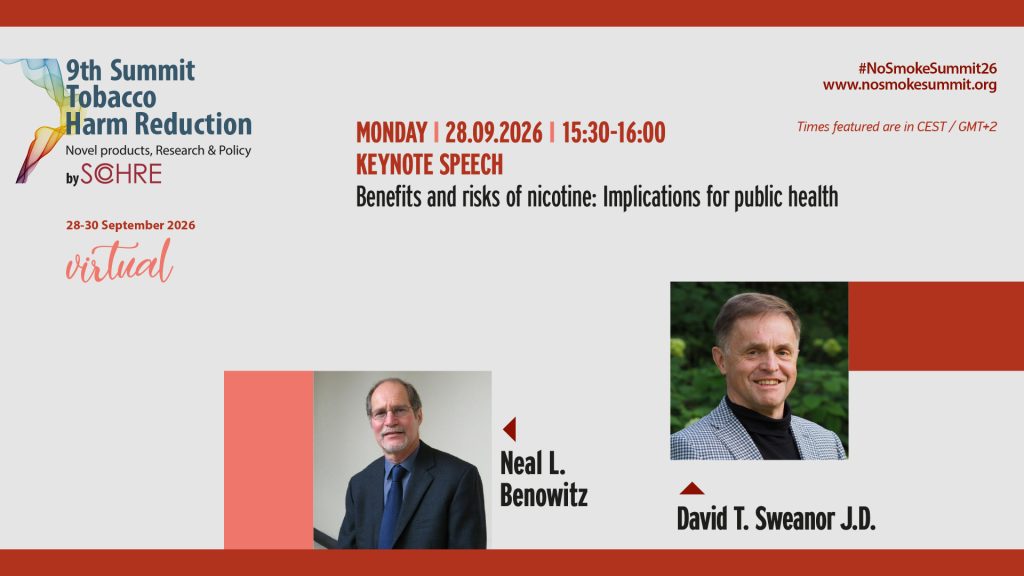
Prof. Neal L. Benowitz opened his speech with a brief presentation of nicotine’s pharmacology, to explain why nicotine might be attractive. Nicotine is a structural analog of acetylcholine – the most prevalent neurotransmitter in the body. As a result, nicotine binds to cholinergic receptors and can basically affect every part of the body, causing the release of other neurotransmitters that have effects on behavior.
Prof. Benowitz then referred to the main medical and non-medical benefits of nicotine use. Smokers or nicotine users usually report pleasure, stimulation, cognitive enhancement, relaxation, mood modulation, enhancement of athletic performance and appetite suppression as the reasons of their habit. In addition, nicotine has an undoubted benefit when used as a nicotine replacement medication. Moreover, due to its attention enhancing effects and its anti-inflammatory effects, nicotine has a series of less documented medical benefits in people with ulcerative colitis, ADHD, schizophrenia, Parkinson’s disease, autoimmune diseases, as well as in pain relief. These effects are usually acute and do not seem to be long-standing, probably because of the development of tolerance.
As Prof. Benowitz noted, the development of tolerance and physical dependence can lead to a nicotine addiction cycle, as drug (i.e. nicotine) abstinence produces withdrawal symptoms and craving, which in turn, causes smokers to use nicotine as a means of self-medication.
Then, the speaker moved to the nicotine product continuum of risk, stressing that the inhalation of combustible products is by far the most harmful habit and that anything that is taken into the lungs, like heat-not-burn products or e-cigarettes, is more harmful than not. The risks are far smaller with smokeless tobacco products, like snus or other oral nicotine products, Prof. Benowitz said, and added that in order to use nicotine products safely, the best thing to do is to use a clean nicotine product that is not inhaled.
After referring to the very well-known devastating cardiovascular effects of cigarette smoking, Prof. Benowitz provided evidence that shows that the actual harm is small in users of non-combustible nicotine products like snus. There are some health concerns in people who already have cardiovascular disease, as well as a probability of reproductive toxicity during pregnancy, but addiction is the greatest concern with non-combustible nicotine products, especially among youth, Prof. Benowitz concluded.
David Sweanor asked Prof. Benowitz to estimate the relative risk of nicotine pouches compared with cigarettes. Prof. Benowitz estimated pouch risk at under 5% of cigarette risk, based on the Swedish data.
To the question whether there is a group of users who would actually have a net benefit with a nicotinic product, despite the risks, Prof. Benowitz answered that nicotine use has a very high prevalence rate among people with ADHD, schizophrenia or anxiety disorders; these are conditions where nicotine could produce beneficial effects, as it improves performance. However, it is really hard to say whether this is a primary effect or a reversal of withdrawal symptoms. Moreover, we know that performance does improve in the short term, but we do not know if the long-term effects constitute a net benefit or not. “I just cannot tell”, Prof. Benowitz said.