
In his keynote speech, chaired by Dr. Lina Nikolopoulou, Professor Solomon Rataemane presented the progress on South Africa’s Harm-Reduction Bill, which remains under parliamentary review, highlighting a shift from limited open discussion toward greater acceptance of harm reduction.
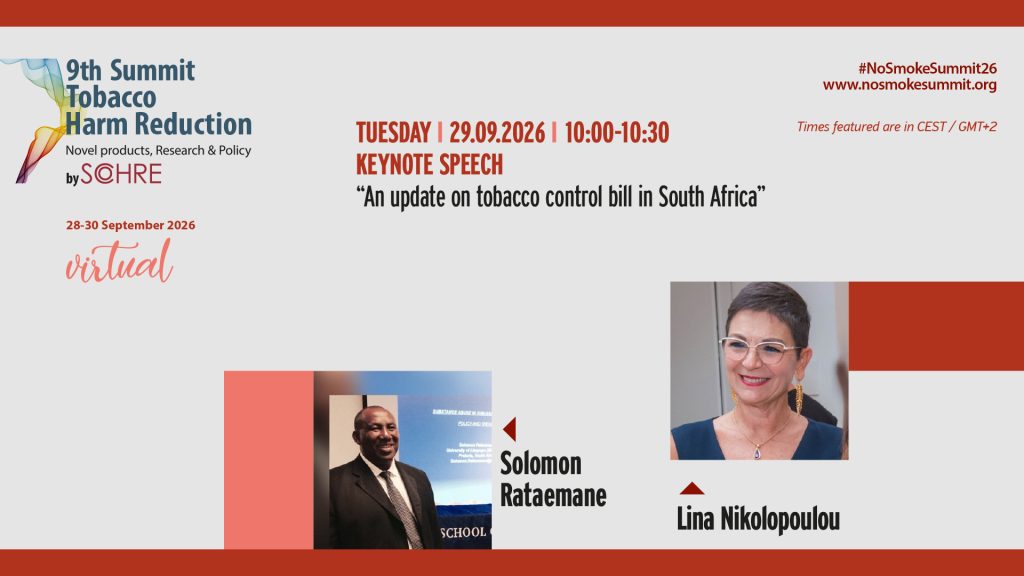 Professor Rataemane traced the development of South Africa’s Tobacco Products Control Bill from its initial publication for public consultation in 2018, through its introduction in Parliament review and has not yet been officially published as an Act.
Outlining South Africa’s smoking prevalence, the growth of youth vaping, and the regulatory gaps in the 1993 tobacco legislation, Professor Rataemane highlighted the widespread availability of vaping products, sweet flavors, and the absence of effective age restrictions as critical enforcement concerns.
The speaker then described proposed restrictions on indoor and outdoor smoking, packaging, health warnings, advertising, sponsorship, promotion, social-media exposure, vending machines, and sales, noting that earlier proposals involving imprisonment are unlikely to remain, with the reviewed approach favoring fines and warnings instead.
A central topic of Professor Rataemane’s presentation was the emerging policy distinction between combustible tobacco and alternative nicotine products, such as vapes and heated tobacco products. Professor explained that the Portfolio Committee and the Department of Health are increasingly adopting risk differentiation and harm reduction as fundamental principles for evaluating each provision.
South Africa’s Department of Health official adoption of the differentiation between combustible cigarettes and alternative products as a guiding principle in 2026 is a significant step, Professor Rataemane underlined, as it opens the door to open communication with both the government and the public about the pros and cons of these new alternatives, as well as the problems associated with combustible tobacco.
Emphasizing the necessity of monitoring, smoking cessation processes, product testing, and regulatory mechanisms to ensure that consumers know what vaping products contain and whether they meet safety standards, the speaker mentioned that a possible future framework would regulate alternative products while applying stricter controls to combustible cigarettes.
Professor Rataemane then outlined the remaining legislative steps which will conclude with the final presidential approval. Although the bill is not yet law, he said, its eventual implementation is expected to include resources for smoking cessation assistance and public guidance.
Discussing how users may transition from combustible cigarettes to vaping and heated tobacco products, Professor Rataemane described the implications for clinical screening, documentation, smoke-free facilities, and cessation services. He also addressed youth vaping and the need for tailored, non-punitive interventions for people with severe mental illness. In the context of psychiatric hospitals, he pointed out challenges such as withdrawal, aggression, and the practical difficulty of applying complete smoking bans. Inpatient vaping is an unresolved harm-reduction issue that needs to be considered during the bill’s clause-by-clause review, he said.
After considering the responsibilities of health workers, ethical and human-rights concerns, enforcement against informal retailers, and the risk of criminalizing poverty, the professor noted uncertainty around estimates of illicit cigarette trade in South Africa, while some assess that illicit cigarette trade markets have increased by about 50%. He also mentioned the need for education around smoking control, including possible engagement with traditional healers.
As to various stakeholders’ position towards the bill and its objectives, Professor Rataemane referred to supporters, such as health and cancer organizations, as opposed to professional groups, such as industry and retail stakeholders, who warn of job losses, illicit trade, and excessive regulation of vaping products. Harm-reduction advocates favor risk-proportionate regulation, he added, emphasizing the need for research to establish facts about newer nicotine products.
Professor Rataemane summarized the bill’s status, outlining provisions for smoke-free indoor environments, plain packaging, display restrictions, product differentiation, and a likely reduction in penalties. He offered advice to clinicians and cessation programs to prepare for increased demand, identifying the expected Portfolio Committee report to the National Assembly as the next major milestone.
At the conclusion of his speech, Professor Rataemane highlighted the growing acceptance of harm reduction and product differentiation in South Africa, expressing hope for further legislative progress.
Following the presentation, moderator Dr. Nikolopoulou praised the consultation process, stating that such prolonged public consultation is, in fact, an act of democracy, before asking whether the government plans to allocate resources to independent research; Professor Rataemane clarified that financial support is more likely to come indirectly through government-supported research institutions.