
Professor Ignatios Ikonomidis, President of the Organising Committee and SCOHRE, opened the 9th Summit on Tobacco Harm Reduction by defining its purpose, presenting recent research on tobacco control and smoking cessation and lastly, outlining the Summit’s core agenda. Professor Anastasia Barbouni, also addressed a welcome message, emphasizing tobacco prevention in youth.
Setting the Scientific Agenda
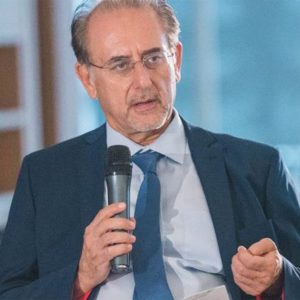 Professor Ignatios Ikonomidis, President of the Organising Committee and SCOHRE, opened the 9th Summit on Tobacco Harm Reduction by defining its purpose: to examine scientific evidence and translate it into measurable public health outcomes. At the heart of the agenda, he placed prevention — and in particular, youth protection, which he described as a priority of growing urgency. “Harm reduction —he emphasised— is not a replacement for prevention or cessation. It is an additional approach to be assessed on the evidence,” he said.
Professor Ikonomidis reviewed clinical evidence on varenicline and cytisinicline, covering their effects on carbon monoxide levels, endothelial function, arterial stiffness, and myocardial performance. He highlighted cytisinicline as an emerging option —comparable in effectiveness to varenicline— for which regulatory approval is still pending. Both treatments, however, face a shared challenge, that relapse rates remain high following initial cessation success.
He then presented a compelling body of evidence in support of tobacco harm reduction as a legitimate public health pillar. Drawing on data from Sweden, the United Kingdom, Japan, and Germany, he showed how harm reduction approaches —including snus, nicotine vaping products, and heated tobacco— have been associated with measurable reductions in mortality from ischaemic heart disease, stroke, and COPD. Nicotine vaping products, he noted, have demonstrated greater effectiveness for smoking cessation than traditional nicotine replacement therapies, and novel products show meaningful improvement in cardiovascular biomarkers when smokers switch away from combustible cigarettes. These findings, he was careful to note, are supported not only by industry-sponsored studies but also by independent clinical research — including data from stroke survivors.
Professor Ikonomidis called for a rigorous, evidence-based approach to harm reduction — one that neither accepts it uncritically nor rejects it on ideological grounds. He pointed to major clinical guidelines that are already moving in this direction: the American Heart Association and the 2024 ESC guidelines for peripheral arterial and aortic disease have both begun to formally recognise the role of electronic cigarettes in secondary prevention. Against this backdrop, he outlined the Summit’s core agenda: protecting youth, advancing smart regulation of both combustible and novel products, assessing the risks and benefits of nicotine, addressing illicit trade, and translating scientific conclusions into evidence-informed European policy. The overarching goal, he concluded, is “to improve public health outcomes through evidence-based medicine.”
Shared Priorities for Youth and Adults
 In her welcome address, Professor Anastasia Barbouni centred her remarks on two priorities she considers inseparable: preventing youth initiation and reducing harm among adults who continue to smoke. Speaking as a paediatrician and a public health professional, she stressed the need for clarity on these shared goals — preventing young people from starting to use tobacco or nicotine products, supporting smoking cessation, and reducing harm for those who do not or cannot quit.
She expressed confidence in the Summit’s programme, which brings together clinical, scientific, regulatory, and economic perspectives across three days. “I hope we will use this opportunity to question assumptions, learn from different countries, and identify where further research is needed,” she said. Progress, she affirmed, depends on careful research, open discussion, and policies that evolve in response to the evidence.